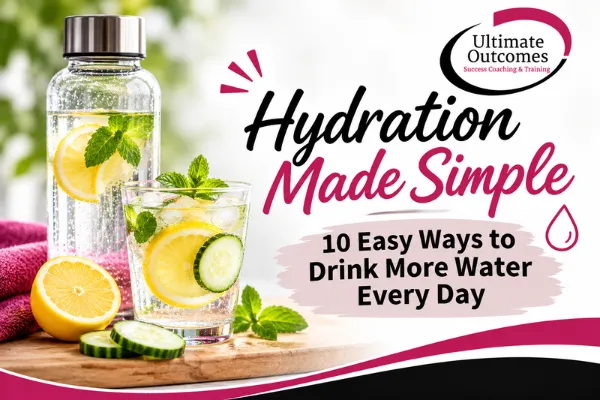
Hydration Made Simple: 10 Easy Ways to Drink More Water Every Day
Healthy Habits & Sustainable Weight Loss
When it comes to improving your health, building healthier habits and achieving sustainable weight loss, it's easy to focus on what you're eating, how much you're exercising or whether you're getting enough sleep.
But there's another important part of your wellbeing that often gets overlooked: hydration.
Drinking enough water is one of the simplest ways to support your body, yet it's something many of us struggle to do consistently.
The good news? You don't need to carry around a giant water bottle, force yourself to drink litres of water or completely overhaul your routine to improve your hydration.
Small, practical changes can make a big difference over time.
Let's explore why hydration matters and how you can make drinking more water an easy, natural part of your everyday life.
Why Is Hydration So Important?
Water plays an essential role in almost every function of your body. In fact, your body is made up of approximately 50–60% water, making hydration fundamental to your overall health and wellbeing.
Staying adequately hydrated helps your body:
Maintain energy levels: Even mild dehydration can contribute to tiredness, headaches and difficulty concentrating.
Support digestion: Water helps move food through your digestive system and can help prevent constipation.
Regulate body temperature: Your body relies on water to cool itself through sweating.
Support physical performance: Good hydration helps your muscles and joints function during everyday movement and exercise.
Maintain healthy bodily functions: Water helps transport nutrients, support circulation and remove waste through urine.
Support appetite awareness: Drinking regularly can help you distinguish thirst from hunger when the sensations feel similar.
When you're not drinking enough, you may notice fatigue, headaches, dry mouth, darker urine or difficulty concentrating.
The challenge is that many people don't realise they're falling behind on their fluid intake until these symptoms appear.
That's why developing simple, consistent hydration habits is so valuable.
Can Drinking More Water Help With Weight Loss?
If you're working towards a healthier weight, hydration can be a useful part of your overall approach.
However, it's important to understand that drinking more water doesn't automatically lead to weight loss.
Instead, staying hydrated supports some of the healthy behaviours that contribute to sustainable weight management.
1. It May Help With Appetite Awareness
Sometimes thirst can be mistaken for hunger, particularly when you're busy or distracted.
Having a glass of water and checking in with how you're feeling can help you become more aware of your body's signals.
This doesn't mean you should drink water instead of eating when you're genuinely hungry. It's about learning to recognise what your body needs.
2. It Can Help You Reduce Sugary Drinks
Replacing soft drinks, sugary juices or other high-kilojoule beverages with water is a simple way to reduce your overall energy intake without making major changes to your meals.
You don't need to eliminate every drink you enjoy. Even replacing one sugary drink each day can be a positive step.
3. It Supports Your Ability to Stay Active
Dehydration can leave you feeling sluggish and make physical activity feel harder than it needs to.
Drinking enough water helps support your body's ability to move, exercise and recover comfortably.
4. It Encourages Consistent Healthy Habits
Sustainable weight loss isn't about doing everything perfectly.
It's about building small, repeatable behaviours that support your health over time.
Making hydration part of your daily routine is one of those manageable habits that can help build momentum towards other positive lifestyle changes.
How Much Water Should You Drink Each Day?
You've probably heard that everyone needs eight glasses of water a day.
While this can be a useful reminder, hydration needs aren't exactly the same for everyone.
In Australia, general guidance for adults aged 19 years and over suggests approximately:
Women: 2.1 litres of fluids per day (around 8 cups)
Men: 2.6 litres of fluids per day (around 10 cups)
These are general adequate intake guidelines, not strict targets. Your individual needs can vary depending on your activity levels, the weather, your health and how much you sweat.
Water is the ideal everyday choice, but other fluids, including milk, tea and coffee, can also contribute to your fluid intake.
You also get water from foods such as fruit, vegetables, soups and yoghurt.
A simple way to monitor your hydration is to pay attention to your thirst and urine colour. Pale yellow urine is generally a good sign that you're drinking enough, although some medications and supplements can affect its colour.
Rather than becoming fixated on a particular number, focus on drinking regularly throughout the day and adjusting your intake to your body's needs.
If you have a medical condition requiring fluid restriction, follow your healthcare professional's advice.
10 Simple Ways to Drink More Water Without Overthinking It
The key to improving hydration isn't necessarily drinking large amounts at once.
It's making water more accessible, enjoyable and easy to remember.
Here are ten realistic strategies you can start using today.
1. Start Your Morning With a Glass of Water
Before reaching for your morning coffee, try having a glass of water.
After several hours of sleep, this is an easy opportunity to begin your day with hydration.
Make it a habit: Keep a glass beside your kettle or coffee machine so it becomes part of your normal morning routine.
2. Keep a Water Bottle Within Reach
One of the biggest reasons people forget to drink water is simply because it's not readily available.
Having a reusable water bottle nearby makes it easier to take regular sips throughout the day.
Make it a habit: Keep a bottle on your desk, in your car or in your bag. Choose one that's easy to clean, comfortable to drink from and practical for your lifestyle.
3. Pair Drinking Water With Existing Habits
Creating a new habit is often easier when you attach it to something you already do.
This is sometimes called habit stacking.
For example, try drinking some water:
After brushing your teeth
When you sit down to work
Before or alongside your meals
After returning from a walk
Whenever you take a break from your desk
Over time, these small reminders can make drinking water feel automatic.
4. Add Natural Flavour
If you find plain water boring, there's no rule saying you have to drink it completely plain.
Try adding fresh ingredients such as:
Lemon or lime slices
Strawberries and mint
Cucumber
Orange slices
Frozen berries
These simple additions can make water more enjoyable without relying on sugary drinks.
5. Set Gentle Reminders
Busy schedules can make it easy to go hours without thinking about water.
A reminder on your phone, smartwatch or computer can help you build awareness.
Start with a reminder every couple of hours if that's helpful.
The goal isn't to force yourself to drink when you don't need to. It's simply to create opportunities to check in with your thirst and hydration.
6. Drink Water With Your Meals
Making water your usual mealtime drink is one of the easiest changes you can make.
Try keeping a glass of water beside your plate at breakfast, lunch and dinner.
This helps make hydration a consistent part of your day without adding another task to your schedule.
7. Eat More Water-Rich Foods
Hydration doesn't have to come entirely from what you drink.
Many nutritious foods contain substantial amounts of water, including:
Watermelon
Cucumber
Strawberries
Oranges
Lettuce
Tomatoes
Zucchini
Soups and broths
Including these foods in your meals and snacks can contribute to your fluid intake while also providing vitamins, minerals and, in many cases, fibre.
8. Find Your Preferred Temperature
Some people love icy-cold water, while others find room-temperature water easier to drink.
You might even prefer warm water or caffeine-free herbal tea, especially during colder months.
There's no single correct temperature.
Experiment with what you enjoy because you're more likely to repeat a habit that feels pleasant rather than forced.
9. Increase Your Intake Gradually
If you're currently drinking very little water, suddenly trying to drink two or three litres every day may feel overwhelming.
Instead, start with one manageable change.
For example, add one extra glass of water to your usual routine and practise that habit consistently.
Once it feels natural, you can build from there if needed.
Remember: consistency matters more than perfection.
10. Make Hydration Convenient, Not Complicated
Sometimes the smallest changes make the biggest difference.
Try filling your water bottle the night before, keeping a jug of cold water in the fridge or placing a glass of water somewhere you'll regularly see it.
The less effort a habit requires, the easier it becomes to maintain.
What If You Keep Forgetting to Drink Water?
First, recognise that forgetting to drink water doesn't mean you're failing at healthy living.
It simply means you haven't yet found a routine that works for you.
Instead of relying on willpower or trying to remember another task, look for ways to make hydration fit naturally into your existing day.
Ask yourself:
When would it be easiest for me to drink water?
Where do I spend most of my day?
What usually gets in the way?
What small change would make drinking water more convenient?
Healthy habits are much easier to maintain when they work with your lifestyle rather than against it.
A Simple 7-Day Hydration Habit Challenge
If you'd like to improve your hydration but aren't sure where to begin, try this gentle seven-day challenge.
Day 1: Pay attention to how much water you normally drink, without judging yourself.
Day 2: Add a glass of water to your morning routine.
Day 3: Keep a water bottle nearby throughout the day.
Day 4: Try adding fruit or herbs to your water for flavour.
Day 5: Make water your usual drink with meals.
Day 6: Add a hydration reminder or pair drinking water with an existing habit.
Day 7: Reflect on what worked best and choose two or three habits to continue.
You don't need to complete every step perfectly.
The purpose is to experiment, discover what feels manageable and build habits that can last beyond the first week.
Sustainable Health Is Built Through Small, Consistent Choices
When we think about improving our health or losing weight, it's tempting to look for dramatic changes that promise fast results.
But lasting progress rarely comes from doing everything at once.
It comes from the small choices we make repeatedly.
Drinking more water might seem like a minor change, but it's a practical way to begin taking better care of yourself.
And when you start building confidence with one healthy habit, it often becomes easier to introduce others, such as moving more regularly, improving your sleep or making more nourishing food choices.
You don't need a perfect routine to make meaningful progress. You need a realistic one that you can keep coming back to.
Ready to Build Healthier Habits That Last?
If you've struggled with maintaining healthy routines or feel overwhelmed by conflicting advice about weight loss and wellbeing, you don't have to figure everything out on your own.
Health coaching can help you move away from restrictive, all-or-nothing approaches and towards realistic, sustainable lifestyle changes.
At Ultimate Outcomes Coaching & Training, we focus on helping you build the habits, confidence and mindset that support long-term health and wellbeing.
Whether your goal is to manage your weight, improve your energy, develop healthier routines or simply feel better in yourself, positive change starts with small, achievable steps.
Ready to take the next step towards a healthier, more balanced you?
Explore how health coaching can support your journey at https://robynratcliff.com.
Because sustainable health isn't about doing everything perfectly. It's about finding what works for you and making it last.